
Layers of Protection
According to the U.S. Centers for Disease Control and Prevention (CDC), drowning is the number one cause of accidental death for infants and young children between the ages of 1-4.
As a drowning prevention resource for your family, ISR recommends a multi-layered approach towards water safety in your home.
5 Layers of Protection for Water Safety
When it comes to water safety, no single precaution is enough.
The safest approach is to create multiple layers of protection around your child. Active supervision, physical barriers, alarms, water competency, appropriate life jackets, and prepared caregivers all work together to help reduce the risk of a water-related emergency.
No single layer replaces another… and no child is ever drown-proof.
1. Active Adult Supervision
Active, attentive adult supervision is one of the most important layers of water safety.
Whenever children are in or around water, designate a responsible adult whose primary job is watching the water. Avoid distractions such as phones, reading, lengthy conversations, or other activities that take attention away from your child.
For young children and children who are not yet independent swimmers, stay close enough to provide immediate assistance when needed.
During parties, vacations, or other gatherings with multiple adults present, consider assigning a designated Water Watcher so there is never confusion about who is actively supervising.
And remember:
If a child is ever missing, check the water first. Seconds matter.
2. Barriers & Pool Fencing
Physical barriers help prevent children from accessing water when an adult isn't present.
Home pools should be surrounded by a four-sided isolation fence that separates the pool from both the home and the rest of the yard.
Pool fencing should:
Be at least 4 feet high
Include a self-closing, self-latching gate
Prevent children from easily climbing over, under, or through it
Have furniture, toys, and other climbable objects kept away from the fence and gate
Meet applicable local pool-safety requirements
Remember that water safety extends beyond your own home. Pay extra attention around pools at grandparents' homes, hotels, vacation rentals, neighborhood gatherings, lakes, ponds, and other unfamiliar environments where your family's normal safeguards may not be in place.
3. Locks & Alarms
Create additional barriers between your child and unsupervised access to water.
Doors and windows leading to a pool or other body of water should be secured. Families may also consider:
Door and window alarms
Pool alarms
Child-resistant locks placed out of a young child's reach
Automatic closing and locking mechanisms where appropriate
Alarms and locks provide another layer of awareness, but they should always supplement—not replace—proper fencing and adult supervision.
4. Water Competency, Self-Rescue Skills & Life Jackets
Learning developmentally appropriate aquatic skills gives children another important layer of protection.
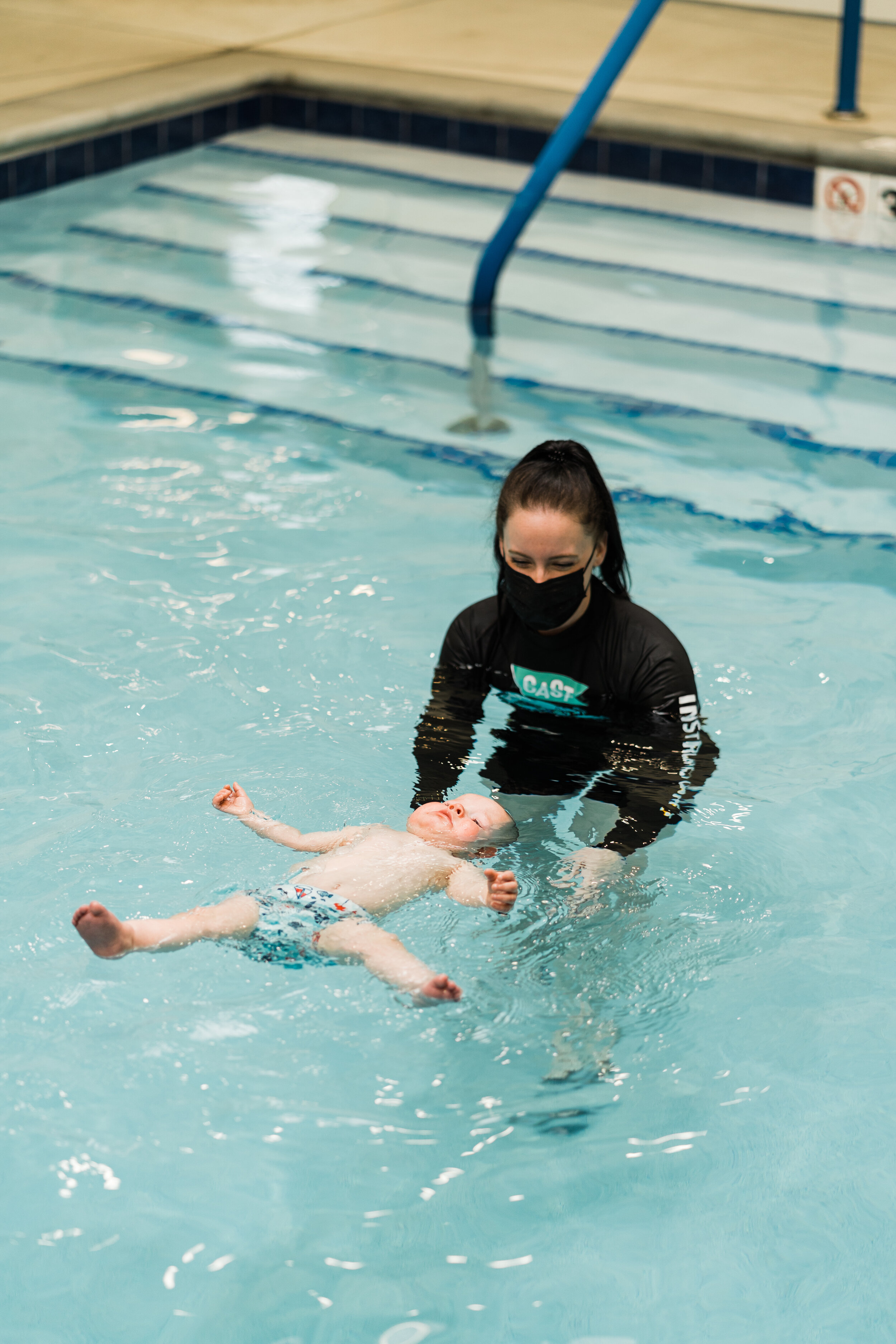
At Safe Swim, ISR Self-Rescue® lessons teach individualized aquatic survival skills based on a child's age, development, and abilities.
Children may learn skills such as independently rolling back to float or progressing through a Swim-Float-Swim sequence.
These skills are designed to give a child another option if they unexpectedly find themselves in the water… but swimming and Self-Rescue skills never replace active adult supervision.
Appropriate life jackets are another important tool, particularly around open water and while boating. Choose a properly fitted, U.S. Coast Guard-approved life jacket appropriate for your child's size and activity.
Inflatable toys, water wings, tubes, and similar flotation products should not be considered substitutes for approved life jackets, supervision, or independent aquatic skills.
5. CPR & Emergency Preparedness
Every parent, caregiver, and adult who regularly supervises children around water should know CPR.
Consider completing a hands-on CPR course and refreshing those skills regularly so you're prepared to respond during an emergency.
Families should also know:
How and when to call 911
Where rescue equipment is located
How to respond if someone is struggling in the water
Who is responsible for supervising children during gatherings or activities around water
If a child is unresponsive or not breathing normally, call 911, begin CPR, and follow the emergency dispatcher's instructions.
Prepared adults are an important part of every family's water-safety plan.
Layers Work Better Together
Water safety isn't about finding one perfect solution. It's about creating layers so that if one safeguard fails, others are still in place.
Supervision + Barriers + Locks & Alarms + Water Competency + Appropriate Life Jackets + CPR Preparedness
Each layer has a different job. Together, they create a stronger approach to water safety.
The Safe Swim Approach
At Safe Swim, we never teach families that swimming skills replace supervision.
Self-Rescue skills are one additional layer of protection… a powerful skill to give a child alongside active supervision, physical barriers, locks and alarms, appropriate life jackets, and prepared caregivers.
Our goal is to help children develop confidence, independence, and skills in the water while helping families understand and maintain the other layers of protection that continue long after a child's swim lesson ends.